In this article
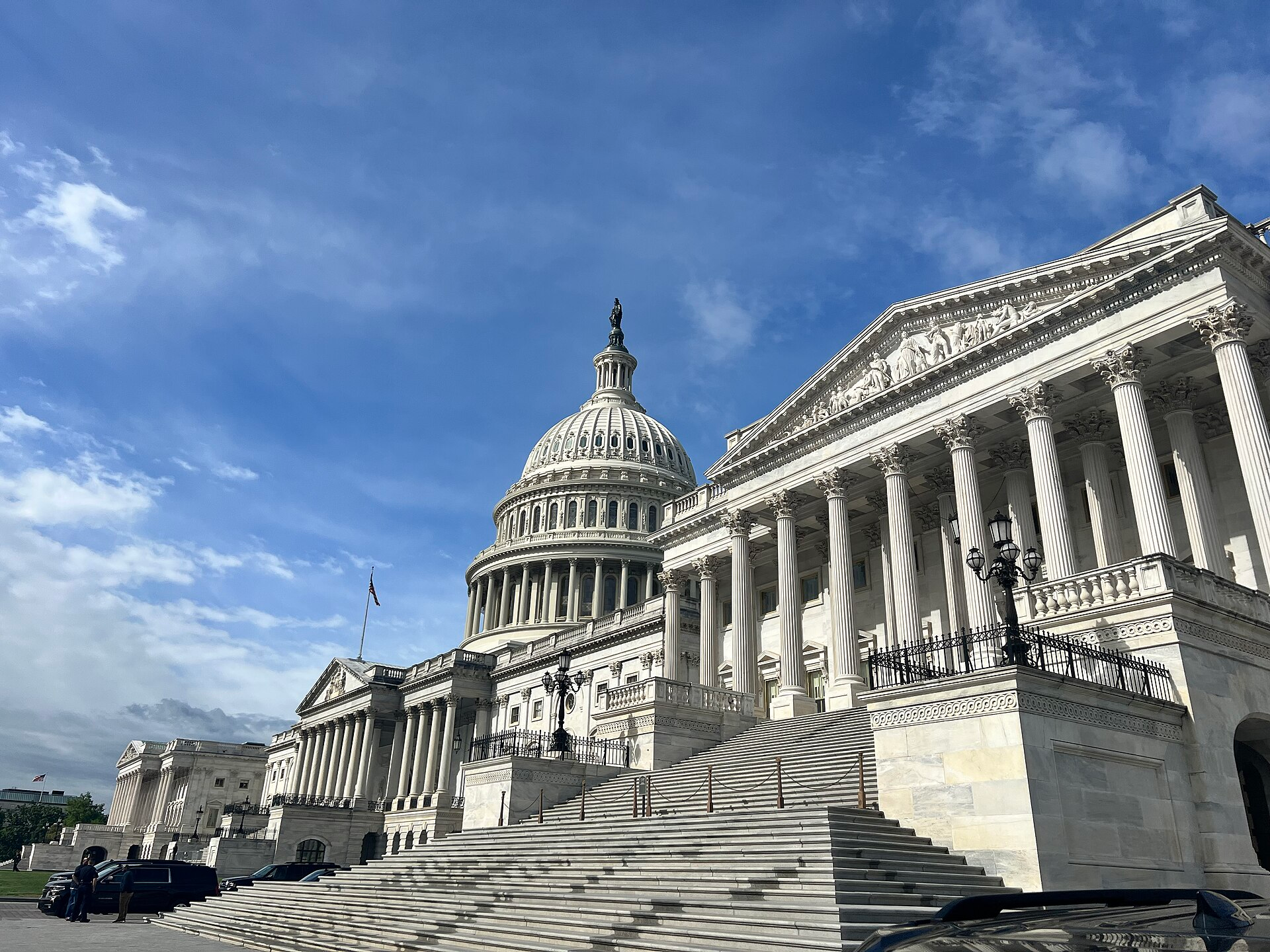
Congress returns on Monday 9 November with federal agencies funded only until 11 December. The House calendar shows 16 session days up to that date for full-year spending bills or another stopgap.
The stopgap, the Continuing Appropriations and Extensions Act, 2027, became law on 2 September. Appropriations Committee chair Tom Cole (Republican, Oklahoma) told the House on 1 September that it would give lawmakers time to "assess and move forward with further appropriations measures in November and December."
The one to watch: the stopgap ends on 11 December
The law, H.R. 6500, funds agencies at fiscal 2026 rates until 11 December or until a full-year bill replaces it. The House agreed to the Senate's version on 1 September by 370 votes to 48 under suspension of the rules, which needs a two-thirds majority. Republicans voted 193 to 19 and Democrats 176 to 29.
The same law sets 11 December as the end date for:
- federal highway and transit programmes, extended from 30 September, with Highway Trust Fund spending authority extended to 12 December;
- the Defense Production Act;
- the Cybersecurity Information Sharing Act of 2015 and the Federal Cybersecurity Enhancement Act of 2015;
- the Environmental Protection Agency's fee authority under the Toxic Substances Control Act;
- the Patent and Trademark Office's fee-setting authority and the Technology Modernization Fund;
- Food for Peace, Grain Standards Act authorities and a set of Veterans Affairs programmes, including housing and services for homeless veterans.
Section 157 of the law's appropriations division matters to grant recipients. Until 11 December it bars the administration from issuing or finalising a rewrite of the Uniform Guidance, the rules on federal awards, proposed on 29 May 2026.
Cole told the House that his committee had reported all 12 fiscal 2027 bills by mid-June and that the House had passed three. Rosa DeLauro (Democrat, Connecticut), the committee's senior Democrat, said of further money for Immigration and Customs Enforcement and the Border Patrol: "We will not support a single cent in further funding without substantial reforms to protect our communities from abuse."
To avoid a lapse, any full-year bill or new stopgap must pass both chambers and be signed by the President by 11 December.
House: nuclear licensing, small business and a 403(b) bill
The House meets at noon on Monday, with votes from 6.30 p.m., according to the Majority Leader's schedule. Six Energy and Commerce nuclear bills on the week's floor list come up under suspension that day. They include the Nuclear REFUEL Act (H.R. 3978) from Bob Latta (Republican, Ohio), which takes equipment that reprocesses spent fuel without isolating plutonium out of the Atomic Energy Act's definition of a "production facility". The House also takes the Veterans' Compensation Cost-of-Living Adjustment Act of 2026 (H.R. 8552) from Morgan Luttrell (Republican, Texas).
From Tuesday the House takes seven Small Business Committee bills under suspension and one bill under a rule. Last votes are due by 3 p.m. on Thursday 12 November, and Friday is a district work day.
The rule bill is the Retirement Fairness for Charities and Educational Institutions Act (H.R. 1013) from Frank Lucas (Republican, Oklahoma). It would let 403(b) plans, which only charities and public educational institutions may offer, invest in bank collective investment trusts and insurance company separate accounts that are exempt from SEC registration, as 401(k) plans already can. The Rules Committee meets on it at 4 p.m. on Monday.
The Financial Services Committee reported the bill by 43 votes to 8 on 20 May 2025, after rejecting by 23 to 28 an amendment from Stephen Lynch (Democrat, Massachusetts) to limit it to plans covered by ERISA. The majority's report says the bill creates "investment parity" for these workers. The minority views, signed by ranking member Maxine Waters (Democrat, California) and six other Democrats, warn that "this bill would leave non-profit workers, teachers, health care workers, and other public servants vulnerable to losing retirement funds." They list AARP, the Consumer Federation of America, Public Citizen, Americans for Financial Reform and the North American Securities Administrators Association as opponents.
Senate: a cloture vote at 5.30 p.m. on Monday
The Senate convenes at 3 p.m. on Monday and resumes the motion to proceed to H.R. 2347, the Survivor Justice Tax Prevention Act, according to the Congressional Record. The House-passed bill would exclude from gross income non-punitive damages received on account of sexual acts or sexual contact. Cloture on the motion, filed on 30 September with 17 senators' signatures, needs three-fifths of senators duly chosen and sworn.
The Senate's defence bill fell at cloture in July
The House passed its fiscal 2027 National Defense Authorization Act, H.R. 8800, on 22 July by 216 votes to 212. Republicans voted 209 to 7 and Democrats 6 to 205. On 14 July the Senate fell short of the three-fifths needed to cut off debate on taking up its own bill, S. 4784, voting 50 to 46 on cloture on the motion to proceed.
What to watch
- 9 November, 5.30 p.m.: the Senate cloture vote on the motion to proceed to H.R. 2347.
- 9 November, 4 p.m.: the House Rules Committee meets on H.R. 1013, which is on the floor schedule for 10–12 November.
- 20 November: the Office of Management and Budget must send the Appropriations Committees a full list of the rescissions that continue under the stopgap.
- 11 December: the stopgap, the highway and transit extension and the expiring authorities run out.
Follow the spending bills and the defence bill through both chambers on PoliData.
Cite this article
PoliData (7 November 2026). Congress returns with 16 House days to fund the government by 11 December. https://www.getpolidata.com/blog/us-congress-week-ahead-2026-11-09
<a href="https://www.getpolidata.com/blog/us-congress-week-ahead-2026-11-09">Congress returns with 16 House days to fund the government by 11 December</a> (PoliData)
Get alerts before a bill moves.
Watchlists, keyword alerts, and plain-English summaries across six parliaments, with source-linked updates delivered to your inbox.