In this article
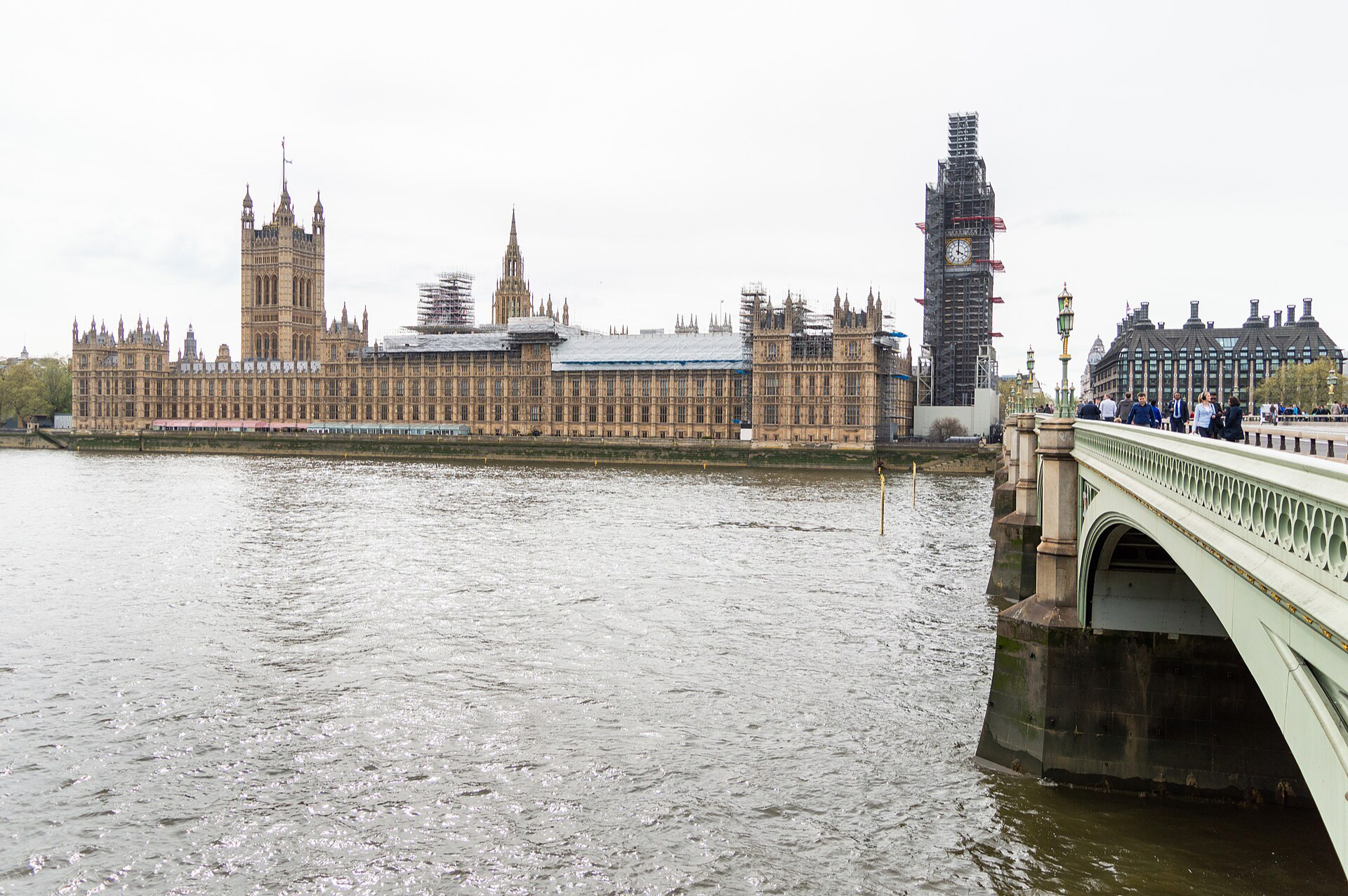
On Tuesday 10 November MPs decide whether to give the Financial Services and Markets Bill [HL] a second reading. It rewrites how the Financial Ombudsman Service decides complaints and abolishes the Payment Systems Regulator.
Chancellor John Healey (Labour, Rawmarsh and Conisbrough) is the bill's Commons sponsor. It comes from the Lords, where the government lost six votes at report stage in September and peers added new duties for the Treasury and the Financial Conduct Authority (FCA).
MPs are asked to approve a narrower ombudsman test
Second reading approves the principle of the bill; the programme motion, money resolution and Ways and Means resolution follow the same day.
The central change rewrites section 228 of the Financial Services and Markets Act 2000. Today the ombudsman decides what is fair and reasonable in all the circumstances. Under the Lords text, the ombudsman may uphold a complaint only if the firm broke an applicable FCA rule, or no FCA rule covered the conduct, and the conduct was not fair and reasonable.
The bill also:
- sets a ten-year long-stop from the act complained of, unless FCA rules set an earlier limit or allow a later one, and applies it to older conduct complained of after commencement;
- requires the ombudsman to ask the FCA for an opinion where its rules may be ambiguous;
- lets the FCA direct the ombudsman and firms to pause complaints when it expects a redress scheme may be needed;
- gives the Treasury the power to appoint the ombudsman scheme's chair.
"The amendments made to FSMA by Clause 8 do not abolish the fair and reasonable test," Treasury minister Lord Pitt-Watson (Labour) told peers on 7 September. Lord Sharkey (Liberal Democrat) said the referral and fairness-test clauses "will turn the independent FOS into a subset of the FCA and make successful complaints harder to progress or achieve." His amendment to keep the current test fell by 144 votes to 59.
Elsewhere, the bill moves payment-systems regulation into the FCA, repeals the certification regime for staff in roles that could cause significant harm, and gives ministers powers to prepare the FCA to supervise lawyers, accountants and trust and company service providers for money laundering, a job now split between 22 professional bodies and HMRC.
Peers rewrote the bill in six votes
The government lost these divisions at report stage:
- 7 September, 246 to 165: peers removed clause 3, which let the Treasury make regulations on access to banking services, including regulations amending Acts of Parliament.
- 9 September, 248 to 163: FCA rules must let a person acting for someone who lacks capacity draw up to £5,000 a year from their Child Trust Fund or junior ISA without a Court of Protection order.
- 9 September, 226 to 162: a statutory test allowing section 166 skilled-person reviews only where there is a material risk of serious detriment and the review is proportionate.
- 9 September, 194 to 138: a Treasury digital assets strategy within 12 months of Royal Assent.
- 9 September, 196 to 138: a Treasury report on how it will use the powers over consumer credit, payment systems, anti-money-laundering supervision, overseas recognition and cryptoassets.
- 9 September, 188 to 125: peers removed the general power to make consequential amendments.
At third reading on 15 September the government kept the regulators' duty to have regard to climate and environment targets, which the bill as introduced had dropped. It won by 258 to 109; Conservative peers cast 97 of the votes against.
In the Commons, Labour holds 404 of the 650 seats. Second reading needs a simple majority of MPs voting.
Firms gain, complainants lose a route
The Treasury's impact assessment for the bill as introduced puts the cut in firms' net direct costs at £126.9 million a year, £69.4 million of it from the senior managers reforms. It estimates the long-stop will cost consumers £0.6 million a year in redress.
Payment-system operators and their participants will deal with the FCA instead of the Payment Systems Regulator, whose 2025/26 budget was £28 million, £27 million of it from fee-payers. The 26,000 FCA-authorised firms with consumer credit permissions face the next phase of Consumer Credit Act reform, which moves requirements out of the 1974 Act towards FCA rules.
The access-to-banking power is likely to return
The government can ask MPs to reverse the Lords' changes in committee. Before the 7 September vote, Lord Pitt-Watson told peers the government did not expect clause 3 to remain in its current form. "I understand the Government intend to reintroduce Clause 3 at a later stage in the Bill's passage with further detail," Baroness Neville-Rolfe (Conservative) said at third reading.
The cryptoasset clauses also need consent from the Northern Ireland Assembly and the Scottish Parliament, which Lord Pitt-Watson expected to be resolved during the Commons stages.
If MPs back it, the bill goes to committee, then to report stage and third reading in the Commons, and any Commons amendments return to the Lords before Royal Assent.
What to watch
- 10 November: Commons second reading, with the programme motion, money resolution and Ways and Means resolution.
- 10 November: the Lords Grand Committee considers the Financial Services and Markets Act 2000 (Cryptoassets) (Miscellaneous Amendments) Regulations 2026 and a companion instrument.
- 11 November: a Commons delegated legislation committee debates the same two draft instruments.
Track the bill's Commons stages on PoliData.
Cite this article
PoliData (7 November 2026). Commons takes up the financial services bill after six Lords defeats. https://www.getpolidata.com/blog/commons-financial-services-bill-2026-11-10
<a href="https://www.getpolidata.com/blog/commons-financial-services-bill-2026-11-10">Commons takes up the financial services bill after six Lords defeats</a> (PoliData)
Get alerts before a bill moves.
Watchlists, keyword alerts, and plain-English summaries across six parliaments, with source-linked updates delivered to your inbox.