In this article
On Wednesday 4 November the European Parliament's environment committee votes on softening the 2035 car rule, under which carmakers would cut fleet CO2 by 90%, not 100%, and offset the rest.
The one to watch: Brussels reopens the 2035 car target
The file is 2025/0420(COD), which amends Regulation 2019/631. The rapporteur is Massimiliano Salini (EPP, Italy). The Commission proposal of 16 December 2025 cuts the 2035 fleet-wide target for cars and vans from a 100% to a 90% reduction. The remaining 10% would be covered by credits for EU-made low-carbon steel or for e-fuels and biofuels. It also cuts the 2030 van target from 50% to 40%, adds super-credits for small EU-made electric cars and folds the old car-labelling directive into the regulation.
ENVI votes on Salini's draft report in its 15:30–16:30 voting slot, according to the committee's draft agenda. The same afternoon, two joint committees vote on the rest of the car package:
- the automotive omnibus, 2025/0422(COD), with co-rapporteurs Andreas Schwab (EPP, Germany), Michael Bloss (Greens/EFA, Germany) and Merja Kyllönen (The Left, Finland);
- clean corporate vehicles, 2025/0421(COD), with co-rapporteurs Tiemo Wölken (S&D, Germany) and François Kalfon (S&D, France).
The Legislative Observatory pencils in a first-reading plenary vote on the CO2 file for 23 November. Fleet managers, leasing companies and fuel suppliers should read the committee text before then.
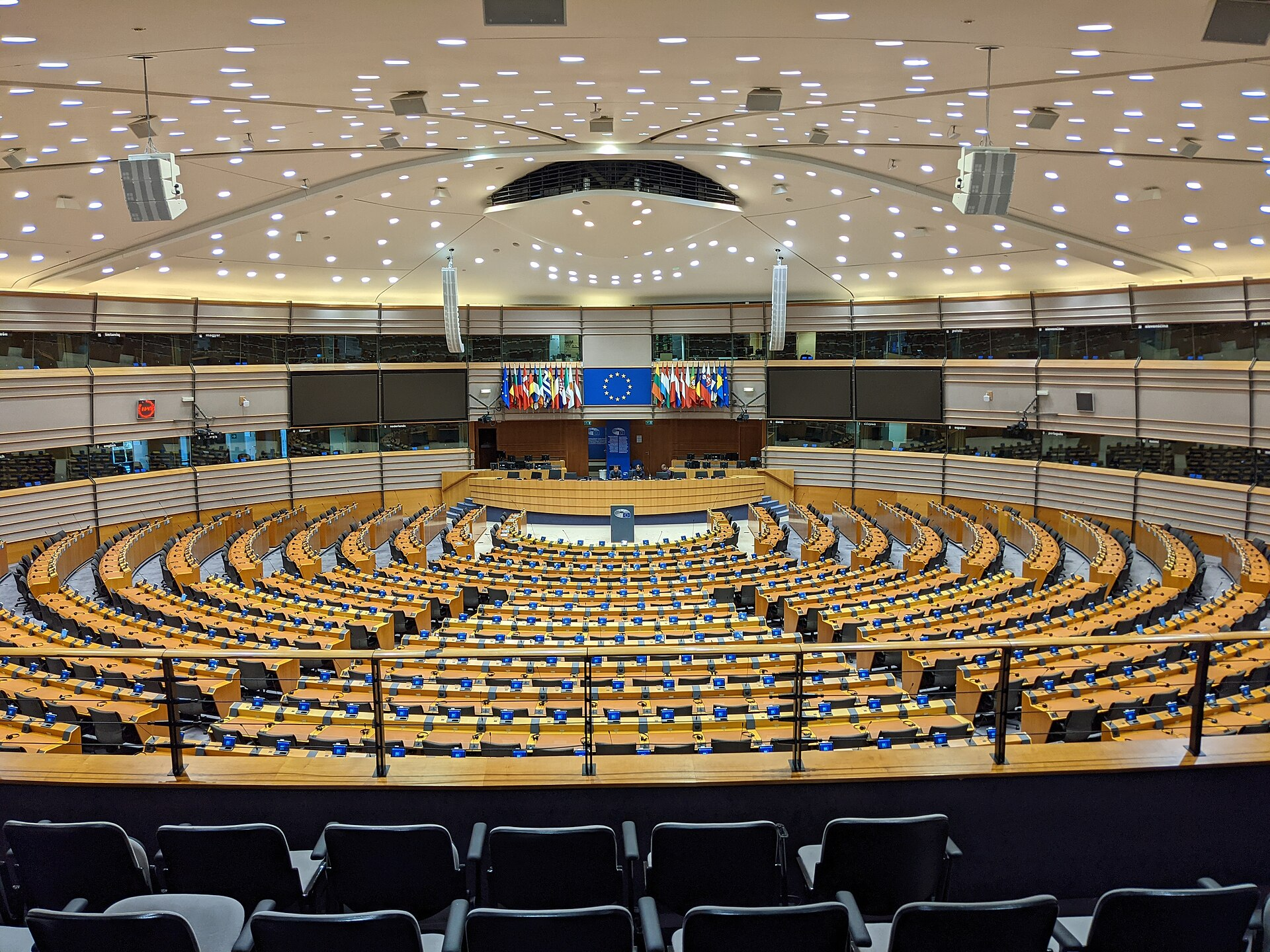
European Parliament: committee week, no plenary
Parliament holds no plenary this week. The next sitting is the Brussels mini-plenary on 11–12 November.
On 4 November the civil liberties committee (LIBE) votes on the provisional agreement recasting the child sexual abuse directive, 2024/0035(COD). The rapporteur is Jeroen Lenaers (EPP, Netherlands), according to LIBE's draft agenda. LIBE also votes to open negotiations on three 2028–2034 home-affairs funds:
- border management and visas, with rapporteur Karlo Ressler (EPP, Croatia);
- asylum, migration and integration, with rapporteur Ana Catarina Mendes (S&D, Portugal);
- internal security, with rapporteur Assita Kanko (ECR, Belgium).
ENVI may also vote on the trilogue deal ending the invalidation of allowances in the ETS Market Stability Reserve, 2026/0085(COD). The rapporteur is Pierfrancesco Maran (S&D, Italy), and the agenda marks the vote "to be confirmed".
Poland: a two-day Sejm with the border and the money-laundering bill
The Sejm's 68th sitting runs Thursday 5 to Friday 6 November.
The government has asked for the tenth extension of the restriction on asylum applications at the Belarusian border, in print 3276, signed by Prime Minister Donald Tusk on 29 October. It wants consent for another 60 days from 17 November. The restriction has applied since 27 March 2025. The request records 474 attempted illegal crossings on the Belarusian border between 1 January and 15 October 2026, against 28,328 in the same period of 2025. It is on the list of items the Marshal may add to the agenda.
The Marshal may also add government bill 3163, which ends open access to Poland's beneficial-owner register. We preview that vote separately.
The same reserve list carries print 3245, which would postpone to the end of 2027 the fines for errors in the national e-invoicing system (KSeF) and extend the VAT reverse charge on gas, electricity and emission allowances by three and a half years. Not on the list: the warnings-not-fines relief for farmers who miss the EU's electronic spray-record rule (print 3040). At its second reading on 23 October, Civic Coalition tabled an amendment limiting the relief to farmers who keep records in another form, and the bill went back to the agriculture committee.
The fixed agenda includes the first reading of print 2705, an Electoral Code amendment presented by Mariusz Witczak (KO, Kalisz). It would let an election committee nominate members of polling-station commissions only where it has registered candidates. The aim is to end what the bill's explanatory memorandum calls "komitety-widma" (ghost committees).
Deputies may also vote on Senate amendments to six tax bills, including personal and corporate income tax, VAT and excise. The Public Finance Committee examines the 2027 budget-implementation bill, print 3154, on 5 November.
United Kingdom: Budget debate ends, then a short recess
The Commons concludes the debate on Chancellor John Healey's 28 October Budget on Tuesday 3 November. The Finance Bill had its first reading on 28 October.
On Wednesday 4 November MPs take the remaining stages of the Sporting Events Bill [HL]. It sets a common legal framework that can be applied to major sporting events held in the UK. The same day the House votes on carry-over motions for the Railways Bill and the Cyber Security and Resilience Bill.
In the Lords, the Cyber Security and Resilience (Network and Information Systems) Bill has its third reading on Monday 2 November. The bill amends the NIS Regulations 2018. Peers begin committee stage on the Representation of the People Bill, which covers votes at 16 and 17, donations and digital imprints, on 2 and 4 November. Further committee days are set for 24 and 30 November.
Both Houses rise after Wednesday. The Lords return on 9 November and the Commons on 10 November.
Germany, the Netherlands and the US
The Bundestag sits Wednesday to Friday, according to its agenda:
- Thursday 5 November: final votes on the animal-welfare amendment requiring video surveillance in slaughterhouses (Drucksache 21/6809), and the first reading of the government's long-term-care reform, the Pflegeneuordnungsgesetz;
- Friday 6 November: final votes on the criminal-code amendment targeting knock-out drops (Drucksache 21/7560).
The Tweede Kamer expects to debate the 2027 budgets for Climate and Green Growth and Interior and Kingdom Relations this week. It also expects the first round on the 2027 Tax Plan; days are not yet fixed.
Americans vote in the midterm elections on Tuesday 3 November, according to the FEC. The House is in its district work period all week.
What to watch
- 4 November: ENVI's vote on the 2035 car CO2 report, and LIBE's vote on the child sexual abuse directive deal.
- 4 November: the Sejm Public Finance Committee takes up the beneficial-owner register bill, print 3163.
- 5–6 November: the Sejm vote on extending the Belarusian-border asylum restriction from 17 November.
- 11–12 November: the European Parliament's Brussels mini-plenary.
Follow these files across all six parliaments on PoliData.
Cite this article
PoliData (30 October 2026). Week ahead 2–6 November: MEPs vote on 2035 car CO2 target. https://www.getpolidata.com/blog/week-ahead-2026-11-02
<a href="https://www.getpolidata.com/blog/week-ahead-2026-11-02">Week ahead 2–6 November: MEPs vote on 2035 car CO2 target</a> (PoliData)
Get alerts before a bill moves.
Watchlists, keyword alerts, and plain-English summaries across six parliaments, with source-linked updates delivered to your inbox.