In this article
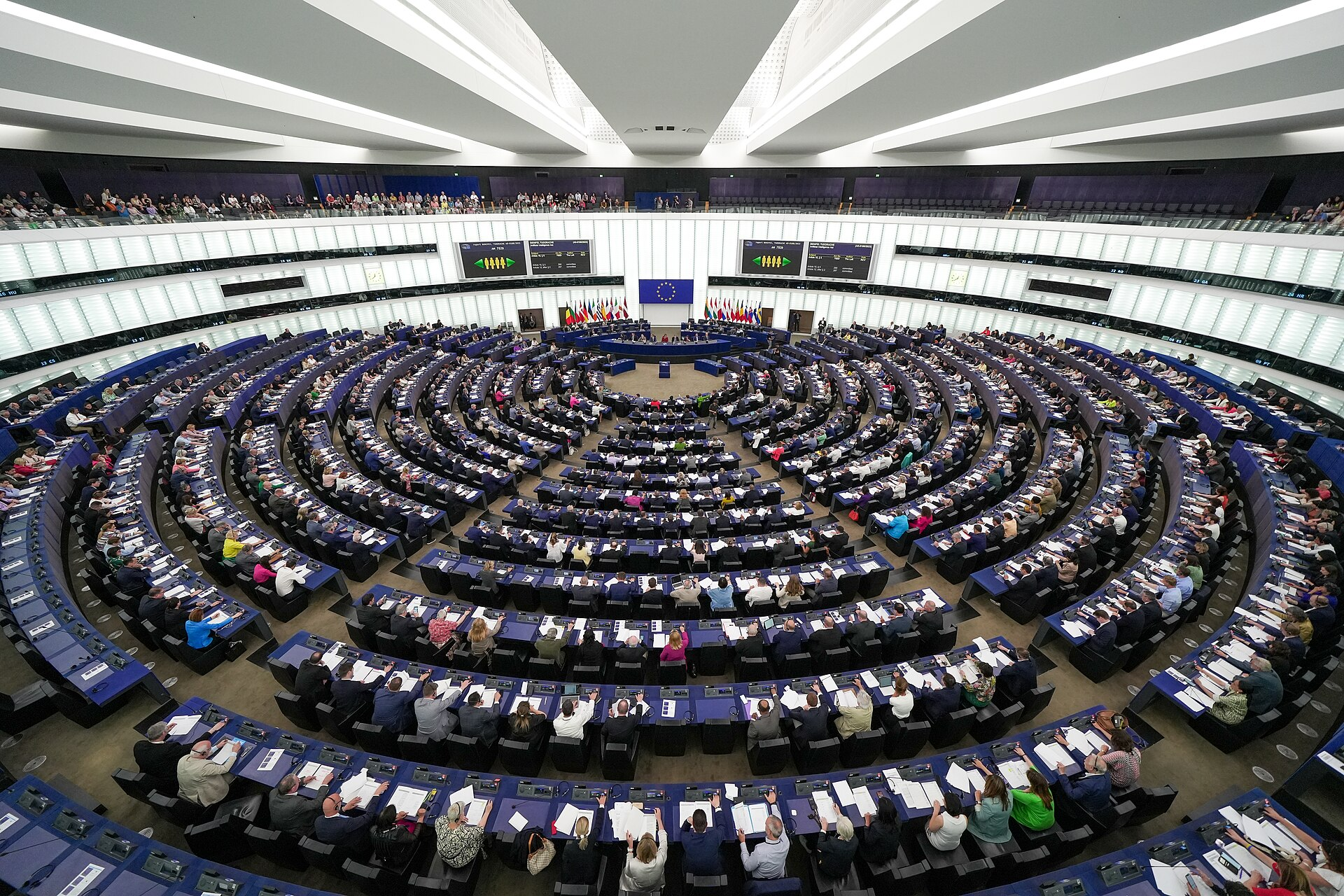
The European Parliament is due to approve the reform of EU medicines law on Wednesday 25 November. It keeps eight years of data protection for drug makers and caps total protection at 11 years.
Rapporteurs Dolors Montserrat (EPP, Spain) and Tiemo Wölken (S&D, Germany) recommend adopting the Council's text unchanged. In the same week the Bundestag votes on Germany's 2027 budget, the Commons opens the Finance Bill and Poland's Senate takes 15 bills the Sejm passed on 6 November.
The one to watch: the medicines reform reaches its last vote
Wednesday's voting list in Strasbourg carries two second-reading recommendations from the public health committee: Montserrat's on the directive that replaces the 2001 medicines code, and Wölken's on the regulation on EU authorisation and the European Medicines Agency. The committee backed them on 10 November by 31 votes to 1 with 6 abstentions, and by 31 to 2 with 5 abstentions.
Both recommendations give one reason: the Council position "reflects the agreement reached between the European Parliament and the Council in interinstitutional negotiations". Negotiators struck that agreement at the trilogue of 10 December 2025, and the Council adopted its position on 28 September 2026.
At second reading the arithmetic favours the text. Under Article 294(7) of the Treaty on the Functioning of the European Union, the Council position stands unless a majority of Parliament's component members rejects or amends it. That is 361 of 720 MEPs.
The Council's statement of reasons sets out what manufacturers and health systems get:
- regulatory protection stays at eight years of data protection, with total protection capped at 11 years, or 12 where a company holds a voucher under the regulation;
- a second year of market protection for a new active substance requires a combination of comparative clinical trials, trials in more than one member state and an early application in the EU, or an unmet medical need;
- a member state may require a company to launch and supply a new medicine on its market, and market protection does not apply to a product that has not complied within three years;
- the "Bolar" exemption from intellectual property rights now covers applications to procurement tenders;
- every antimicrobial becomes prescription-only, though member states may exempt those for topical use.
Once Parliament approves, the presidents of both institutions sign the acts and they go to the Official Journal. The directive's repeals and transitional provisions generally apply 24 months after it enters into force.
On the same voting list is the Critical Medicines Act, on the security of supply of critical medicines. Rapporteur Tomislav Sokol (EPP, Croatia) brings back the text agreed with the Council, which the committee approved on 14 July.
European Parliament: carbon market, simplification and the 2027 budget
The session opens on Monday 23 November at 17:00. Tuesday's votes at noon include:
- the market stability reserve of the EU Emissions Trading System, where the agreed text stops the invalidation of allowances held in the reserve. Pierfrancesco Maran (S&D, Italy) is rapporteur;
- four "Omnibus IV" files. One regulation extends reliefs now reserved for small and medium-sized firms to small mid-caps, amending the GDPR, the Prospectus Regulation and the Batteries Regulation among others;
- Parliament's first-reading position on faster environmental assessments, which the environment committee adopted on 4 November. Emma Ytterell (Renew, Sweden) is rapporteur.
On Wednesday MEPs vote on the joint text of the 2027 EU budget, agreed in conciliation with the Council. The rapporteurs are Nils Ušakovs (S&D, Latvia) and Michalis Hadjipantela (EPP, Cyprus).
Tuesday starts with Council and Commission statements on restoring the rule of law in Hungary after the 2026 elections. The resolution goes to a vote at the next part-session.
Poland: the Senate takes the Sejm's November bills
The Sejm does not sit. Its next sitting runs from 2 to 4 December.
The Senate's 69th sitting on 25 and 26 November takes 15 bills that the Sejm passed on 6 November. The Senate's deadline for each is 9 December. It can accept a bill, amend it or reject it, and the Sejm then votes on any amendment or rejection. Among them:
- the VAT bill, print 3245, which postpones fines for errors in the national e-invoicing system KSeF until the end of 2027 and extends the reverse-charge mechanism for gas, electricity and emission allowances. The Sejm passed it by 437 votes to 1, with 1 abstention;
- the accounting bill, print 3261, which brings company sustainability reporting into line with Directive (EU) 2026/470. It passed by 444 votes to none;
- the sanctions bill, print 3003, which creates a system of national sanctions, adds information manipulation aimed at national security as a ground for listing, and sets penalties for breaching and circumventing sanctions. It passed by 240 votes to 202, with 1 abstention.
Germany: the Bundestag votes on the 2027 budget
The Bundestag spends its sitting week on the 2027 budget act, ministry by ministry, from Tuesday 24 November at 10:00. The debate on the Chancellor's budget opens Wednesday's sitting at 09:00. The second reading closes on Friday 27 November at 12:35, and the third reading, together with the budget accompanying act, follows at 12:40.
United Kingdom: the Finance Bill and two bills in ping-pong
The Commons gives the Finance Bill its second reading on Monday 23 November.
On Tuesday MPs consider Lords amendments to two government bills. The Cyber Security and Resilience (Network and Information Systems) Bill, sponsored by Liz Kendall (Labour, Leicester West), amends the 2018 rules on the security of systems that essential services rely on. The Armed Forces Bill is sponsored by John Healey (Labour, Rawmarsh and Conisbrough).
A public bill committee starts line-by-line scrutiny of the Financial Services and Markets Bill [HL] on Tuesday and continues on Thursday.
In the Lords, the Health Bill has committee days six and seven on Monday and Wednesday. On Thursday peers debate the outcome of the EU–UK summit of 20 November.
Netherlands: the nitrogen emergency bill
The Tweede Kamer votes on Tuesday 24 November at 15:00. On Wednesday at 10:00 the agriculture committee closes written questions on the emergency bill, tabled on 3 November, that replaces the nitrogen deposition values in the Environment and Planning Act with emission values.
What to watch
- 24 November, 12:00: Parliament's votes on the carbon market reserve and the Omnibus IV files.
- 25 November, 12:00: the second-reading votes on the medicines directive and regulation, and the vote on the 2027 EU budget.
- 25–26 November: the Polish Senate's decisions on the KSeF, sanctions and sustainability reporting bills. Any amendment sends a bill back to the Sejm.
- 27 November, 12:40: the Bundestag's third reading of the 2027 budget act.
Follow these files across all six parliaments on PoliData.
Cite this article
PoliData (19 November 2026). Week ahead 23–27 Nov: MEPs close the EU medicines reform. https://www.getpolidata.com/blog/week-ahead-2026-11-23
<a href="https://www.getpolidata.com/blog/week-ahead-2026-11-23">Week ahead 23–27 Nov: MEPs close the EU medicines reform</a> (PoliData)
Get alerts before a bill moves.
Watchlists, keyword alerts, and plain-English summaries across six parliaments, with source-linked updates delivered to your inbox.