In this article
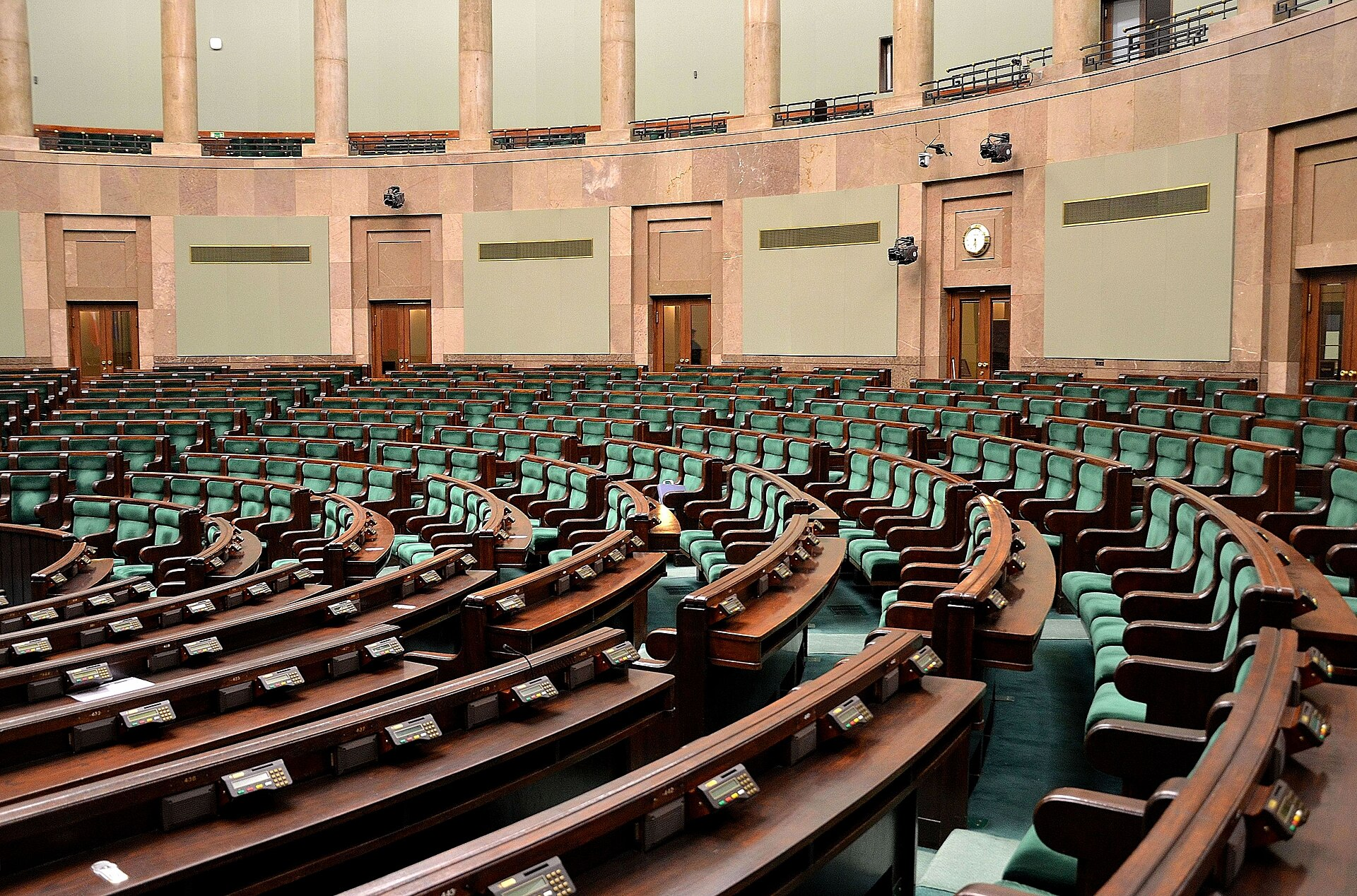
On 6 November the Sejm voted 281 to 21, with 146 abstentions, to close Poland's free Central Register of Beneficial Owners (CRBR) to anyone without a legitimate interest from 1 October 2027.
Marcin Łoboda, secretary of state in the Ministry of Finance and head of the National Revenue Administration, steered the government bill, print 3163, through the chamber. It transposes the register-access rules of the sixth Anti-Money Laundering Directive, Directive (EU) 2024/1640. On 25 September the European Commission sent Poland and 17 other member states a letter of formal notice for missing the deadline.
PiS argued against, then abstained
The bill needed a simple majority of the 448 deputies who voted. It got 281 votes, according to the Sejm's record of vote 41.
- For: Civic Coalition (KO) 152, Rozwój Plus 39, PSL–Third Way 32, the Left 20, Centrum 15, Polska 2050 14, Razem 4 and five independents.
- Against: Konfederacja 17, Konfederacja Korony Polskiej 3 and one independent.
- Abstaining: Law and Justice (PiS) 142, Direct Democracy 3 and one independent.
PiS made the case against the bill a day earlier. Jarosław Krajewski (PiS, Warsaw) told the chamber on 5 November that his party had built a free, open register that "świetnie funkcjonuje" (works very well). He closed: "nie można poprzeć propozycji przedstawionej przez rząd" (the government's proposal cannot be supported). His club then abstained rather than vote no.
Krajewski also opened a new line of attack. Article 2 of the bill keeps the current Inspector General of Financial Information in office until the end of their term. He called it "zabetonowanie stanowiska" (concreting in the post) a year before the parliamentary election. Łoboda answered that the term rules have applied since 2001, including under the PiS governments of 2015–2023.
Rozwój Plus, the club aligned with Mateusz Morawiecki, had asked at first reading for a slower start for small firms. It voted for the bill. Krzysztof Lipiec (Rozwój Plus, Kielce) said the club still wanted answers on IT readiness, costs for obliged institutions, control over access to the data and "proporcjonalność kar" (the proportionality of the penalties).
The committee kept the access design
The Public Finance Committee reviewed the bill on 4 November and adopted 16 amendments. Its rapporteur, Dorota Marek (KO, Kraków), told the chamber that most were "o charakterze prawno-legislacyjnym" (legal and drafting in nature). The committee's report, print 3285, left the new access rules intact. No amendments were tabled at second reading on 5 November, so the Sejm moved straight to the final vote.
Under the passed text, most of the law takes effect on 1 January 2027 and the new reporting system for the inspector general (SIGIIF 2.0, built on the UN's goAML software) on 1 April 2027. The CRBR access rules take effect on 1 October 2027.
Two tiers replace an open register
Today anyone can search the CRBR online, free of charge. From October 2027 access splits in two.
- Public authorities keep direct access. They include prosecutors, the police, the security services, the tax authorities and sanctions enforcers, plus the European Public Prosecutor's Office, OLAF and Europol. Banks, notaries, accountants and other obliged institutions keep access for customer due diligence.
- Everyone else must apply under a new Article 68d and show a legitimate interest linked to preventing money laundering or terrorist financing.
The law presumes that journalists, public-benefit NGOs and academic staff have that interest. They do not have to prove a link to the specific company, but their work must concern money laundering. A likely counterparty to a transaction, contracting authorities checking bidders and the bodies that manage EU funds are also presumed to qualify. The company is not told that someone looked it up.
The authority has 12 days to decide, extendable if requests surge, and 30 days in the first year. A confirmation of access lasts three years. A holder that fails to report a change that could end its legitimate interest faces a fine of up to PLN 50,000.
A beneficial owner can also ask for their data to be withheld. Under a new Article 61c, they must show that disclosure would expose them to a disproportionate risk of crimes such as kidnapping, extortion or fraud. Data on people without full legal capacity, such as minors, can be withheld too.
Senate next, then President Nawrocki
The Senate has 30 days to accept, amend or reject the bill. President Karol Nawrocki then has 21 days to sign it, refer it to the Constitutional Tribunal or return it to the Sejm, which needs a three-fifths majority to override a veto.
Due-diligence teams lose the free search
Procurement teams, M&A advisers and supplier-vetting functions that now search the CRBR freely will have to file requests and wait from October 2027. Obliged institutions will reach the register through the new SIGIIF login.
What to watch
- November: the Senate takes up the bill within 30 days of receiving it.
- About 25 November: Poland's two months to answer the Commission's letter of formal notice run out.
- 1 January 2027: the main provisions take effect.
- 1 October 2027: the register closes to applicants without a legitimate interest.
Follow the bill's next stages on the Sejm's page for print 3163, and track it alongside other EU-transposition bills on PoliData.
Cite this article
PoliData (30 October 2026). Sejm votes to close Poland's open beneficial-owner register. https://www.getpolidata.com/blog/sejm-crbr-register-access-november-2026
<a href="https://www.getpolidata.com/blog/sejm-crbr-register-access-november-2026">Sejm votes to close Poland's open beneficial-owner register</a> (PoliData)
Get alerts before a bill moves.
Watchlists, keyword alerts, and plain-English summaries across six parliaments, with source-linked updates delivered to your inbox.