In this article
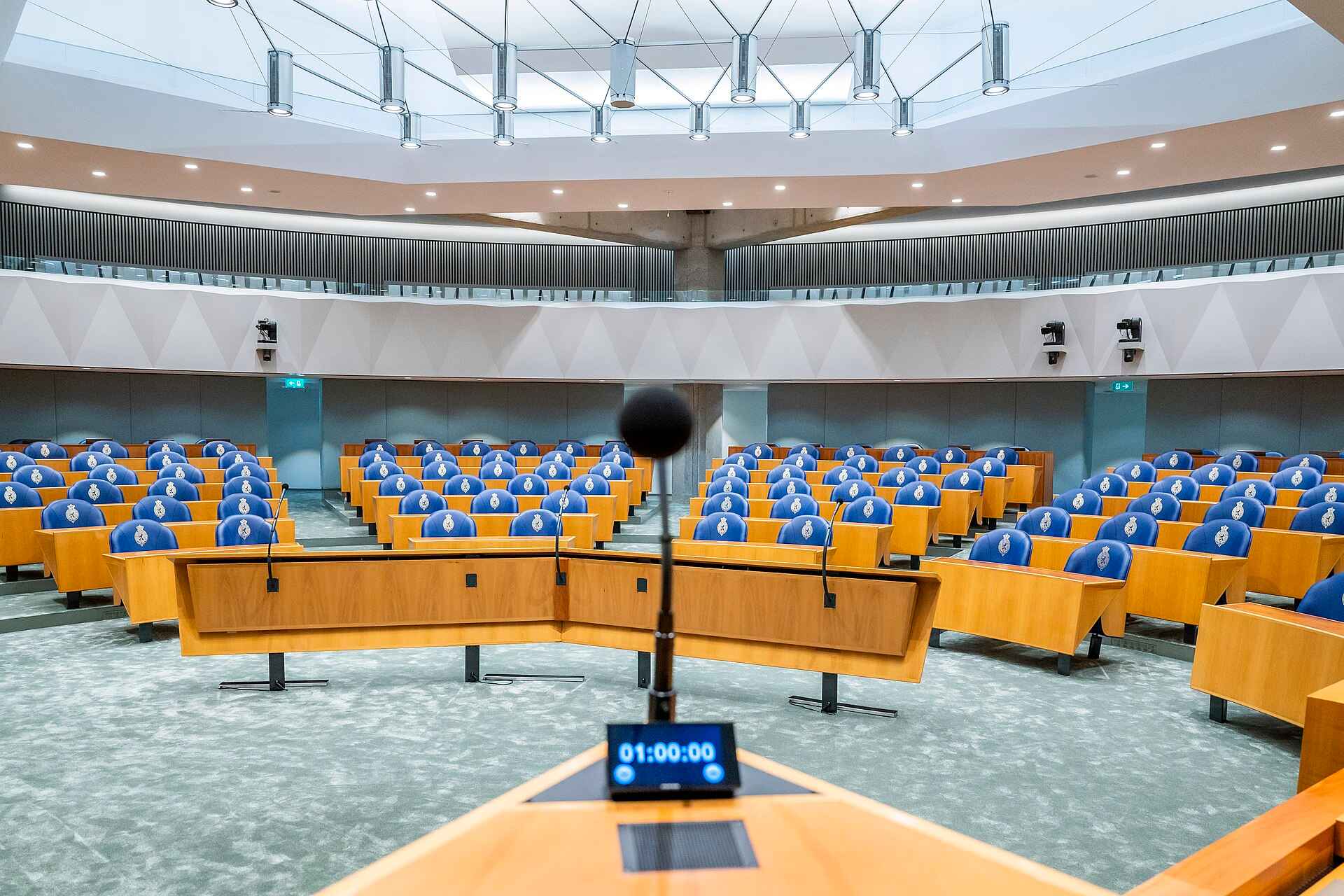
On Thursday 12 November the Tweede Kamer votes on the 2027 Tax Plan, which limits inflation indexation for every income-tax payer, and the D66–VVD–CDA minority cabinet lacks an assured majority.
State Secretary for Finance Eelco Eerenberg (D66) steers the package with Finance Minister Eelco Heinen (VVD). The package has four bills: the Belastingplan 2027 (37022), Other Tax Measures 2027 (37023), a start-up and scale-up bill on employee stock options (37024) and the Pillar Two safe-harbour bill (37025). The debate resumes on Tuesday 10 November. By 6 November, 17 amendments to the main bill were still standing.
The freedom contribution has already shrunk
At the centre of the package is what the cabinet calls a vrijheidsbijdrage (freedom contribution): brackets and tax credits rise by less than inflation. As tabled on 15 September, the bill applied 48% of the full 2.6% correction for 2027, raising €1.5 billion from citizens in 2027 and €3.4 billion a year from 2028. A formula set by order in council would fix the 2028 step to raise €1.9 billion. Businesses contribute €1.5 billion in 2027, mostly through a higher disability-fund (AOF) premium set outside the bill.
The cabinet's third memorandum of amendment, dated 4 November, raises the share to 59.8%, so brackets rise by 1.55%, at a cost of €347 million a year. In their letter of 3 November, Heinen and Eerenberg wrote that the extra money means "de vrijheidsbijdrage in 2027 door de koopkrachtverbetering effectief teniet wordt gedaan" (the purchasing-power improvement effectively cancels out the freedom contribution in 2027).
Sixty-six seats, 76 needed
D66 has 26 seats, VVD 22 and CDA 18: 66 of 150. With every member voting, the package needs 76.
The memorandum says the inflation change meets the wishes of PRO (Progressief Nederland, 20 seats), JA21 (9), BBB, ChristenUnie and SGP (3 each), 50PLUS (2) and Volt (1), which hold 41 seats between them. After talks with ChristenUnie and 50PLUS, the cabinet kept the deduction for specific care costs, which it had planned to scrap from 2028, in a narrower form, at a cost of €312 million a year in revenue. After talks with BBB, it dropped the abolition of the reduced VAT rate for floriculture and deferred the decision to the 2028 Tax Plan.
On 4 November that was still not enough. "Van die meerderheid zijn we nu niet verzekerd" (we are not assured of that majority now), Inge van Dijk (CDA) told the chamber.
Taxpayers pay; landlords and motorists gain
- Income-tax payers and pensioners: brackets and credits indexed at 1.55% instead of 2.6%.
- People with high care costs: from 2028 the deduction excludes costs such as hearing aids, insoles, vaccines, dental care and alternative medicine, and the income thresholds rise from 1.65% to 1.7% and from 5.75% to 6.5%.
- Investors buying homes they do not live in: transfer tax falls from 8% to 7%.
- Motorists: the petrol excise discount runs to 1 January 2028, and the cabinet has added the diesel discount for 2027.
Wealth tax is the fault line
Jesse Klaver (PRO) and Laurens Dassen (Volt) tabled amendment 35 on 4 November, which softens the tax rise on work by €1.5 billion through a €180 higher general tax credit. They would pay for it with a 33% top rate in box 2, up from 31%, a new 45% top rate in box 3 from 2029 and curbs on "paper gifts". It also strikes the 2028 step.
Wendy van Eijk (VVD) replied in the 4 November debate: "Het is wat mij betreft ondenkbaar dat dit amendement in deze vorm door een coalitie gesteund wordt" (as far as I am concerned it is unthinkable that a coalition would back this amendment in this form).
The cabinet welcomed amendment 27, by Pieter Grinwis (ChristenUnie) and Corrie van Brenk (50PLUS), and left it to the chamber's judgement. It lowers the first two bracket rates by 0.14 points and reverses a €100 cut to the older persons' tax credit, and pays for it by raising the labour tax credit by €17 instead of €133. Gidi Markuszower (Groep Markuszower, 7 seats) tabled an amendment on 5 November for full indexation in 2027. Michiel Hoogeveen (JA21) said his amendments, one on the air passenger tax, were still with the drafting office; he had tabled none by 6 November.
Prime Minister Rob Jetten (D66) told MPs on 4 November: "wij hebben geen 76 zetels of meer, dus we moeten op alle voorstellen die we doen altijd de hand reiken naar anderen" (we do not have 76 seats or more, so on every proposal we make we always have to reach out to others).
If the Tweede Kamer passes the package, it goes to the Eerste Kamer, where D66, VVD and CDA hold 22 of 75 seats and PRO (14) and BBB (11) are the largest groups; the cabinet wants most measures in force on 1 January 2027.
What to watch
- Monday 9 November, 16:00: the finance committee's legislative consultation on the box 3 amending bill (37053); the cabinet's 3 November letter says the bill will extend the capital-gains levy in box 3 by 2029 at the latest.
- Tuesday 10 November, 16:15: the plenary debate on the package resumes.
- Thursday 12 November: votes on the four bills and their amendments at the start of the afternoon sitting.
Follow these files across all six parliaments on PoliData.
Cite this article
PoliData (7 November 2026). Tweede Kamer votes on the 2027 Tax Plan without an assured majority. https://www.getpolidata.com/blog/belastingplan-2027-vote-2026-11-12
<a href="https://www.getpolidata.com/blog/belastingplan-2027-vote-2026-11-12">Tweede Kamer votes on the 2027 Tax Plan without an assured majority</a> (PoliData)
Get alerts before a bill moves.
Watchlists, keyword alerts, and plain-English summaries across six parliaments, with source-linked updates delivered to your inbox.