The comparison question
A Sejm division and a Tweede Kamer division can both produce a headline total, yet the records may describe different kinds of choices. This example shows how to check the date, question and recording method before comparing support across chambers.
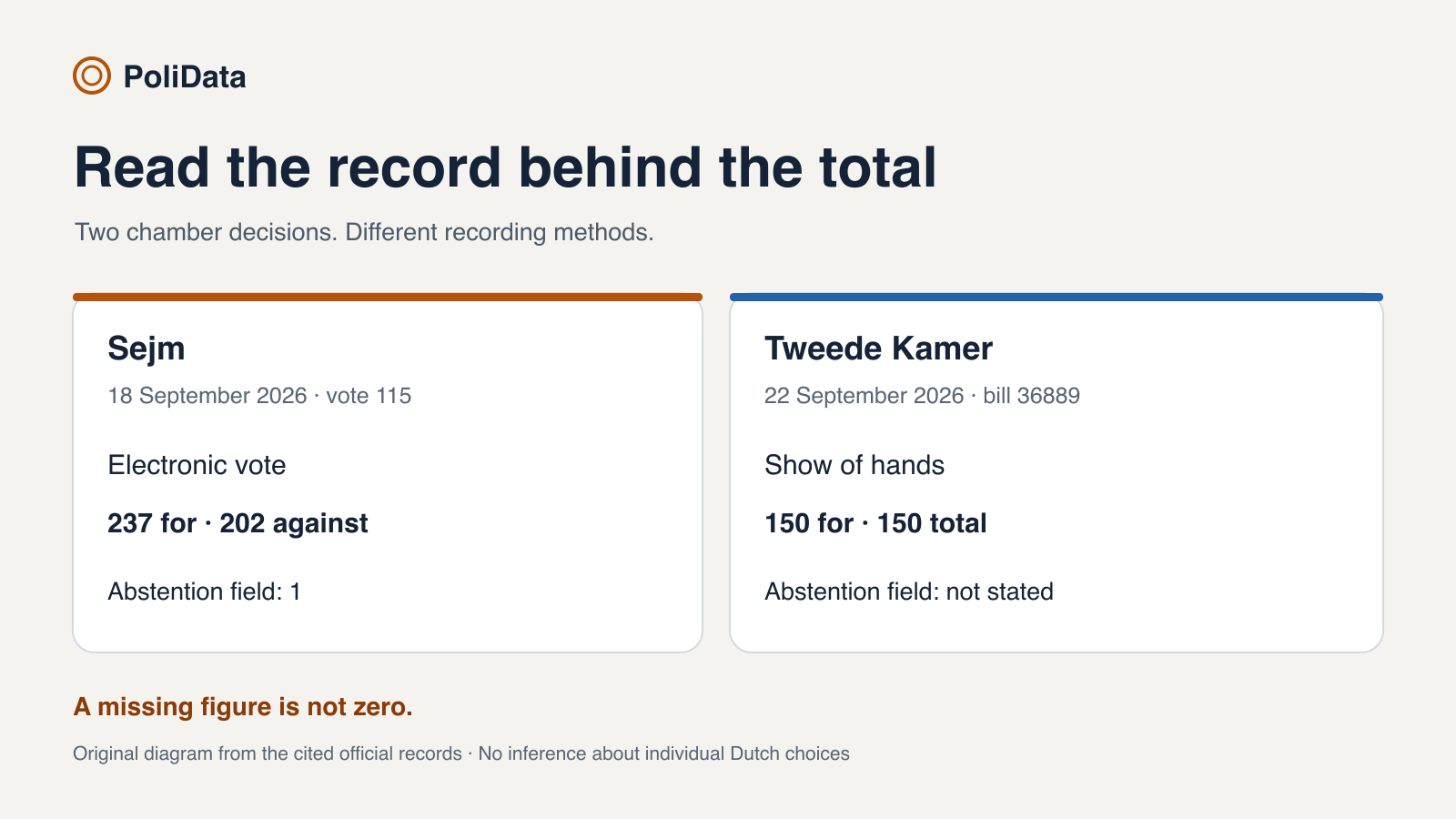
The Polish record lists votes for, votes against and an abstention. The Dutch result reports acceptance by show of hands and a total in favour. Reducing both records to yes/no/abstain would conceal a material difference.
Sejm sitting 65 vote 115 and Tweede Kamer bill 36889 only. · Compare the published field labels and recording methods, without calculating cross-chamber rates. · A missing field is not zero. The Dutch result does not establish separate individual choices or an equivalent abstention category.
How each chamber records a division
The Sejm procedure page records a third reading on 18 September 2026 at sitting 65, vote 115, on print 3100. Its question is the bill as a whole, and its decision is recorded as passed. The vote-detail record identifies the method as electronic and separately names an abstention field.
For bill 36889, the Tweede Kamer reports acceptance by show of hands. Its result includes 150 in favour, a required threshold of 75 and 150 total. The saved source passage includes a table headed “Fracties”, “Zetels” and “Voor/Tegen”: factions, seats and for/against. Those headings do not establish 150 separately recorded individual choices, or a separate abstention count.
The two votes, side by side
Worked example — two chamber decisions, four days apart. The Sejm recorded 237 for, 202 against and one abstention on 18 September 2026. The Tweede Kamer recorded 150 in favour, 150 total and a threshold of 75 on 22 September 2026. Keep the recording methods and field labels attached to these figures.
| Record field | Sejm | Tweede Kamer |
|---|---|---|
| Vote date | 18 September 2026 | 22 September 2026 |
| Reference | Sitting 65, vote 115; print 3100 | Bill 36889 |
| Method | Electronic | Show of hands |
| Reported result | 237 for; 202 against; 1 abstention | 150 in favour; 150 total; threshold 75 |
| Abstention field | Explicit: 1 | Not stated in the cited result |
| Chamber decision | Passed | Accepted |
These entries establish decisions by the named chambers. They do not, by themselves, establish enactment or the status of later legislative steps.
What the totals can tell you
The dates and reported figures can be quoted side by side with their source labels. The figures alone cannot establish that both chambers used the same counting unit, or that the Dutch total represents separate choices recorded for 150 people. Nor can the absence of a Dutch abstention field be converted into zero abstentions.
Policy scope needs its own check. The Dutch proposal concerns widening access to government archives. The Polish passage used here identifies a whole-bill vote, without describing its policy subject. These totals therefore do not establish a shared policy question; a policy comparison requires checking both bill subjects first.
Comparison of what the quoted passages establish, rather than a comparison of policy positions. · Separate the bill's subject from its vote totals and retain the scope of each source passage. · Do not infer a policy match, or its absence, from aggregate totals. This example compares record formats only.
A monitoring method that survives the difference
Begin with the specific vote event and its parliamentary source. Preserve the chamber, reference and date. Read the question actually put to the chamber, then retain the source's choice labels and voting method. Check whether the record supplies named-person choices, faction outcomes or aggregate totals before selecting a comparison measure.
Keep a missing field visibly marked as missing. If a policy comparison is the goal, verify both bill subjects before selecting the pair. A stored event count or a sample of child records describes the inspected data; it does not establish complete parliamentary coverage.
Where this comparison stops being useful
This pair supports a comparison of record formats and vote dates. The quoted Dutch result does not supply an abstention count or individual choices, and these totals do not establish a policy match. Person-level behaviour, equivalent abstention rates and support for a common policy therefore require further source evidence.
Sources
Sejm procedure record — print 3100Sejm official vote detail — sitting 65, vote 115Tweede Kamer plenary result — 22 September 2026Tweede Kamer bill 36889 — vote result and proposalAI-assisted research and drafting. The generated draft was corrected and its quoted sources and original diagram checked by an AI assistant at the publisher's explicit request, before this revision was released.